

Categories
Cancer Treatment

CAR-T Cell Therapy: A Second Chance at Life—and a Billion-Dollar Biotech Bet

Once a scientific marvel, CAR-T (Chimeric Antigen Receptor T-cell) therapy is now a billion-dollar frontier reshaping cancer care, investment, and innovation.

What is CAR-T Therapy?

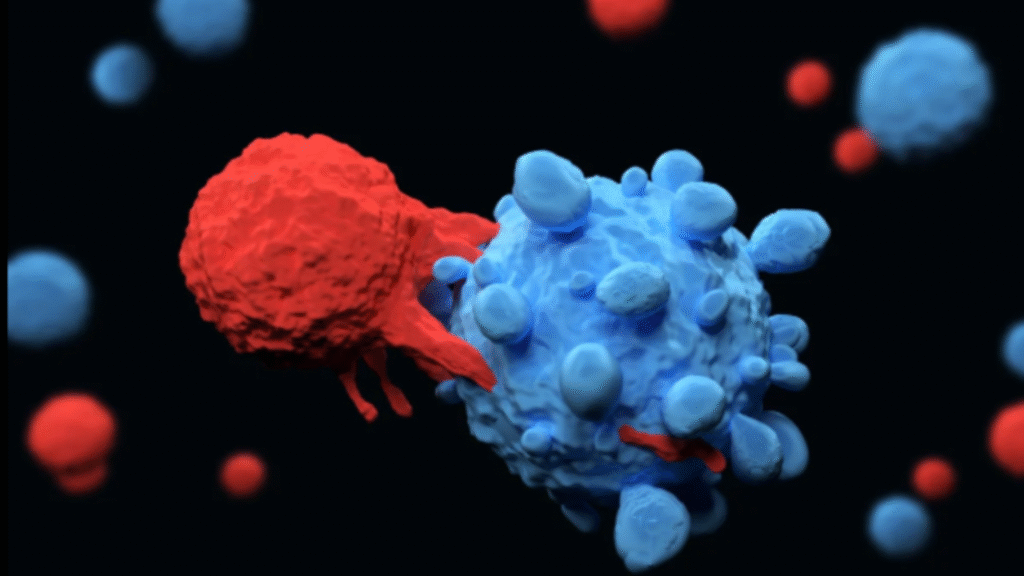
CAR-T is a personalized immunotherapy where a patient’s own T cells are extracted, genetically modified to target cancer cells, and then reinfused. This “living drug” teaches the immune system to attack cancer with precision. It’s a multi-step process—leukapheresis, genetic engineering, and re-infusion—followed by monitoring for side effects like cytokine release syndrome (CRS) and neurotoxicity, which are manageable at specialized centers.
Breakthrough Outcomes

CAR-T therapy has delivered unprecedented results, especially in blood cancers like leukemia, lymphoma, and multiple myeloma. Real-world data shows 80–90% response rates, with many patients achieving long-term remission—and even cures. Individuals previously referred for hospice are now walking out cancer-free.

FDA Milestones and Evolving Guidelines

 Since the FDA approved the first CAR-T (Kymriah) in 2017, over six therapies have entered the market, with NCCN and ASCO now recommending CAR-T earlier in treatment for certain cancers. Trials are even testing its use as frontline therapy.

Beyond Blood Cancers

 Though current successes lie in hematologic cancers, efforts are underway to tackle solid tumors (lung, breast, brain, pancreas) using localized delivery and multi-targeted CARs. CAR-T is also being explored for autoimmune diseases like lupus and fibrotic conditions, expanding its future reach far beyond oncology.

Why Investors Are Watching

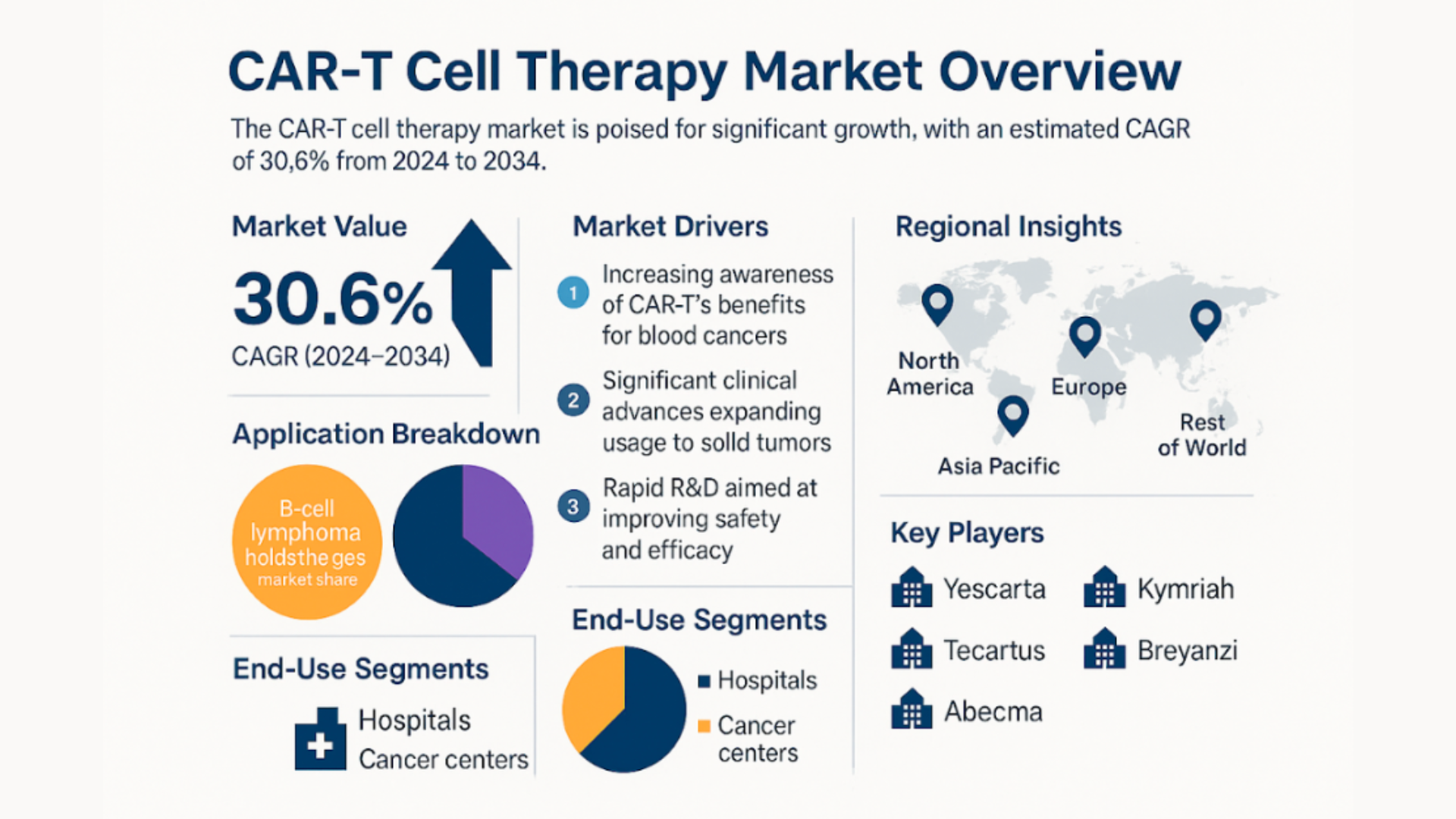
 The U.S. CAR-T market is expected to grow from $3B in 2023 to over $10B by 2030, with global projections reaching $61B–$129B by 2034. Growth is driven by rising cancer rates, expanding indications, advanced manufacturing, and massive pharma investments. Biotech firms like BMS, Novartis, J&J, and Legend Biotech are all-in.

Tech Meets Medicine

 AI is optimizing CAR-T across the board—from designing safer, more effective CARs to predicting patient response and side effects. Smart manufacturing, including AI-monitored bioreactors and automation, is reducing production time from weeks to days. This convergence of bioengineering and tech is streamlining delivery and expanding access. These advancements were a key focus at the recent Digital Health Innovation Summit, where CAR-T’s future was spotlighted as a leading frontier of tech-driven care.

Policy & Reimbursement

 Medicare covers all FDA-approved CAR-T therapies, reimbursing hospitals significantly. Private insurers also cover CAR-T but require treatment at certified centers. Innovative models like pay-for-response and installment-based reimbursement are being explored. Victim assistance programs are helping bridge access gaps for those facing high out-of-pocket costs.

Market Insights
Final Thought

CAR-T therapy represents a paradigm shift in precision medicine—offering renewed hope for patients once deemed untreatable. For clinicians, it’s a revolutionary tool. For patients, it’s a second chance. For investors and innovators, it’s a rapidly maturing space blending science, technology, and high impact. In many ways, we’re not just treating cancer—we’re rewriting biology’s rulebook.

Categories
Uncategorized

The AI Revolution in Embryo Selection: Transforming Fertility Care Through Data-Driven Precision

By Abhishek Shankar, CEO of MyBabyBridge

The fertility field is undergoing a paradigm shift. Once reliant on microscopes and subjective judgment, embryo selection is now being revolutionized by artificial intelligence (AI). This isn’t just a tech upgrade, it’s a data-driven transformation promising more accurate embryo assessment, higher pregnancy success rates, and broader access to advanced care.

The Limitations of Traditional Embryo Selection

Historically, choosing the right embryo has relied heavily on an embryologist’s trained eye. Yet even experienced professionals agree only about 65% of the time. This inconsistency can lead to different outcomes for similar patients and prolonged treatment cycles—at significant financial and emotional costs, especially given that each IVF round can cost between $15,000 and $25,000.

AI’s Role in Precision Embryology

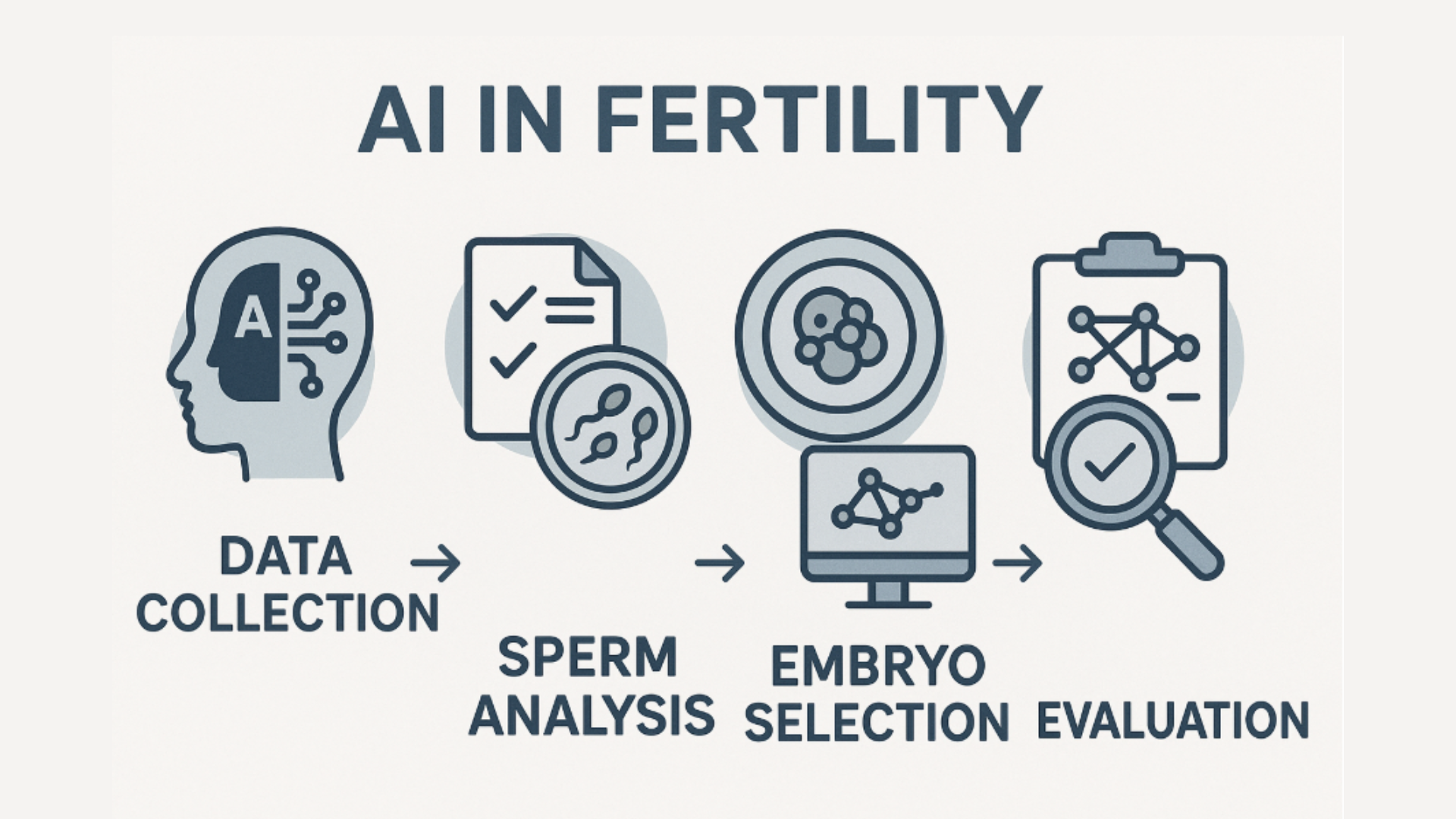
AI tools, particularly Convolutional Neural Networks (CNNs), analyze subtle patterns in embryo development that humans often miss. Time-lapse imaging further enhances accuracy by tracking embryonic growth over time. Newer approaches integrate imaging, patient history, lab results, and even genetic data, producing robust viability forecasts.

Studies now show AI-assisted embryo selection can predict pregnancy success with up to 82% accuracy, outperforming traditional methods. Some tools also estimate chromosomal normality (euploidy) from visuals alone, potentially reducing the need for invasive genetic testing.

Expanding Access and Standardizing Care

AI is helping decentralize fertility care. Smaller clinics and remote centers can now access high-level embryo evaluation without needing in-house specialists. By using cloud-based AI systems trained on vast datasets, these clinics achieve consistency once limited to large academic institutions.

For clinics, adopting AI improves workflow efficiency, freeing staff for patient care and complex decision-making. Patients benefit from shorter treatment timelines, reduced medication use, and clearer insights into their fertility journey.

Challenges and Regulation

Despite its promise, AI integration comes with challenges. Algorithm transparency and dataset diversity remain critical issues to ensure equitable, explainable results. Gradual implementation, robust staff training, and patient education are essential to preserve trust and uphold ethical standards.

Regulatory bodies like the FDA are now outlining clearer frameworks for AI-based diagnostics, while fertility organizations work to standardize best practices, paving the way for safer, more widespread adoption.

Looking Ahead

Embryo-selection AI is evolving toward real-time, multi-modal systems combining culture monitoring, genomic data, and patient history. Fully automated labs may soon standardize embryo handling and grading, reducing errors and enhancing efficiency.

For patients, this means greater clarity, faster cycles, and improved success rates. For providers, AI offers a competitive edge, provided they invest early in infrastructure, training, and integration.

Conclusion

AI is setting a new standard in fertility care—one that’s more accurate, consistent, and accessible. Clinics embracing this transformation today are not just enhancing outcomes but reshaping the future of reproductive medicine. With thoughtful collaboration among clinicians, engineers, and regulators, AI will continue to elevate care—without losing the human touch at the heart of every family’s journey.

By ACH

Chase
Global Health Forum, Inc.
Account number: 686392278
Routing number (ACH/Wire): 021000021

By Check

RAJEEV KAUL CPA PC
303-5th Avenue, Suite # 1007
New York, NY-10016