

Categories
Uncategorized

Managing GERD: Beyond Just Acid Control

By Dr. Vivek V Gumaste, MD, MRCP(I), MHCM (Harvard)

Gastroesophageal Reflux Disease (GERD) is a common digestive condition that affects about 1 in 4 people in North America. It causes symptoms like heartburn, regurgitation, and chest discomfort. But GERD isn’t just inconvenient, it’s costly and potentially dangerous. Over 4.3 million outpatient visits are made annually for GERD in the U.S., with an average treatment cost of $12,232 per patient. Of this, $4,277 is spent on medications alone.

GERD also increases the risk of developing esophageal cancer. Despite this, many patients don’t respond well to standard treatments like proton pump inhibitors (PPIs). Studies show that up to 50% of people taking PPIs still experience symptoms. Clearly, new solutions are needed

Limitations of Current Testing

Diagnosing GERD can be challenging. Endoscopy often shows normal results, even in symptomatic patients. pH testing, while considered a gold standard, has a high false-negative rate and is uncomfortable. Intraluminal impedance testing adds some value but is still invasive and difficult for patients.

A New Approach: Mucosal Impedance Testing (MIT)

A promising development discussed in wellness forum health communities is Mucosal Impedance Testing (MIT). This method measures the health of the esophageal lining in real time, during an endoscopy. It can identify both acid and non-acid reflux and detect long-term tissue damage. The MiVu device, developed by Diversatek Healthcare, uses a sensor placed on the endoscope to gather data. Studies show MIT may be more accurate than traditional pH tests and is easier on patients.

Could Your Genes Be Behind Your Heartburn?

Genetics also play a big role in GERD. Research shows that 30–40% of GERD risk is inherited. Specific genes, such as FOXF1 and BARX1, have been linked to the disease. These genes may affect how the esophagus develops and functions. There’s also strong genetic overlap between GERD, Barrett’s esophagus, and esophageal cancer, highlighting the need for early detection and tailored treatment.

Precision Medicine and PPIs

PPIs are broken down in the liver by an enzyme called CYP2C19. Depending on a person’s genes, the body may process the drug too quickly or too slowly. Genetic testing (genotyping) can help doctors personalize PPI doses. However, this practice is not yet common in routine care. Summit Healthcare Solutions suggests more clear guidelines are needed before it becomes widespread.

What About Probiotics?

Probiotics are often used for gut health, and some small studies suggest they may help with GERD symptoms like bloating and regurgitation. However, more large-scale, high-quality research is needed to confirm these benefits.

AI and New Drugs

Artificial intelligence (AI) is being used to read diagnostic images, interpret test results, and speed up drug discovery. In Japan, researchers developed a new drug candidate (DQ-18) using AI, showing faster and safer results.

A newly approved drug, Voquezna (vonoprazan), offers quicker relief than PPIs. It works differently and does not need food for activation. Studies show it may be more effective for GERD and peptic ulcers.

The Growing GERD Market

According to Summit Healthcare Solutions, the GERD market in major global regions was worth $5.1 billion in 2024 and could grow to $6.4 billion by 2035. New technology, personalized care, and better drugs are driving this growth.

Final Thoughts

GERD is more than just acid reflux. From genetics and new testing methods to AI and advanced drugs, the future of GERD treatment is rapidly evolving. With better tools and tailored care, millions of patients could finally find lasting relief.

Categories
Uncategorized

The AI Revolution in Embryo Selection: Transforming Fertility Care Through Data-Driven Precision

By Abhishek Shankar, CEO of MyBabyBridge

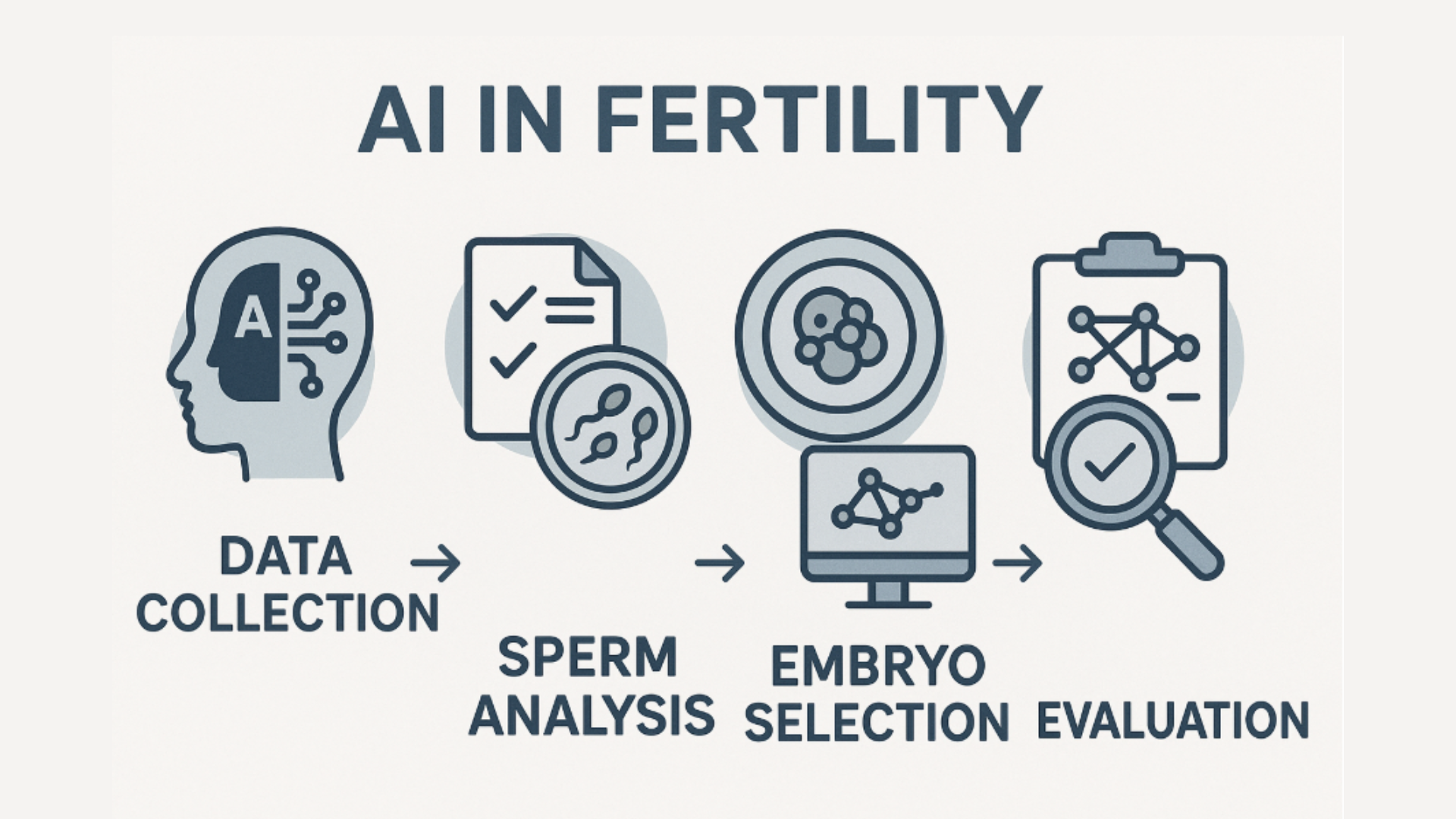
The fertility field is undergoing a paradigm shift. Once reliant on microscopes and subjective judgment, embryo selection is now being revolutionized by artificial intelligence (AI). This isn’t just a tech upgrade, it’s a data-driven transformation promising more accurate embryo assessment, higher pregnancy success rates, and broader access to advanced care.

The Limitations of Traditional Embryo Selection

Historically, choosing the right embryo has relied heavily on an embryologist’s trained eye. Yet even experienced professionals agree only about 65% of the time. This inconsistency can lead to different outcomes for similar patients and prolonged treatment cycles—at significant financial and emotional costs, especially given that each IVF round can cost between $15,000 and $25,000.

AI’s Role in Precision Embryology

AI tools, particularly Convolutional Neural Networks (CNNs), analyze subtle patterns in embryo development that humans often miss. Time-lapse imaging further enhances accuracy by tracking embryonic growth over time. Newer approaches integrate imaging, patient history, lab results, and even genetic data, producing robust viability forecasts.

Studies now show AI-assisted embryo selection can predict pregnancy success with up to 82% accuracy, outperforming traditional methods. Some tools also estimate chromosomal normality (euploidy) from visuals alone, potentially reducing the need for invasive genetic testing.

Expanding Access and Standardizing Care

AI is helping decentralize fertility care. Smaller clinics and remote centers can now access high-level embryo evaluation without needing in-house specialists. By using cloud-based AI systems trained on vast datasets, these clinics achieve consistency once limited to large academic institutions.

For clinics, adopting AI improves workflow efficiency, freeing staff for patient care and complex decision-making. Patients benefit from shorter treatment timelines, reduced medication use, and clearer insights into their fertility journey.

Challenges and Regulation

Despite its promise, AI integration comes with challenges. Algorithm transparency and dataset diversity remain critical issues to ensure equitable, explainable results. Gradual implementation, robust staff training, and patient education are essential to preserve trust and uphold ethical standards.

Regulatory bodies like the FDA are now outlining clearer frameworks for AI-based diagnostics, while fertility organizations work to standardize best practices, paving the way for safer, more widespread adoption.

Looking Ahead

Embryo-selection AI is evolving toward real-time, multi-modal systems combining culture monitoring, genomic data, and patient history. Fully automated labs may soon standardize embryo handling and grading, reducing errors and enhancing efficiency.

For patients, this means greater clarity, faster cycles, and improved success rates. For providers, AI offers a competitive edge, provided they invest early in infrastructure, training, and integration.

Conclusion

AI is setting a new standard in fertility care—one that’s more accurate, consistent, and accessible. Clinics embracing this transformation today are not just enhancing outcomes but reshaping the future of reproductive medicine. With thoughtful collaboration among clinicians, engineers, and regulators, AI will continue to elevate care—without losing the human touch at the heart of every family’s journey.

By ACH

Chase
Global Health Forum, Inc.
Account number: 686392278
Routing number (ACH/Wire): 021000021

By Check

RAJEEV KAUL CPA PC
303-5th Avenue, Suite # 1007
New York, NY-10016